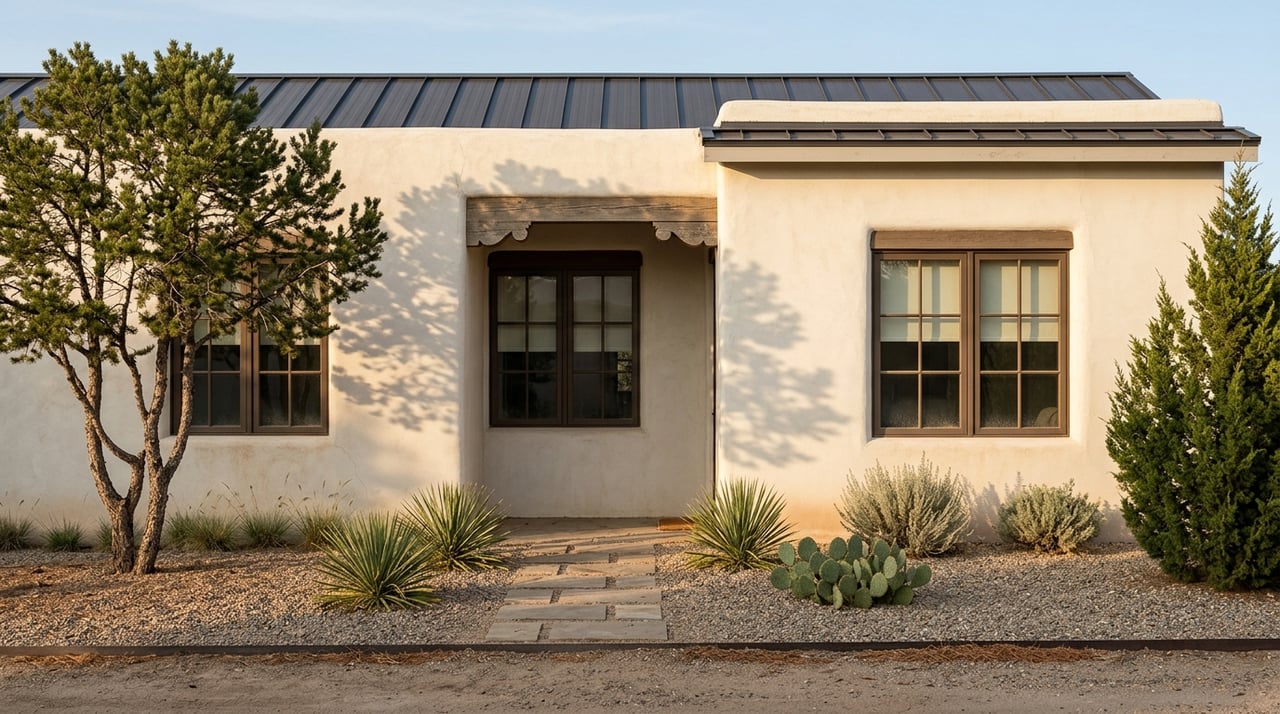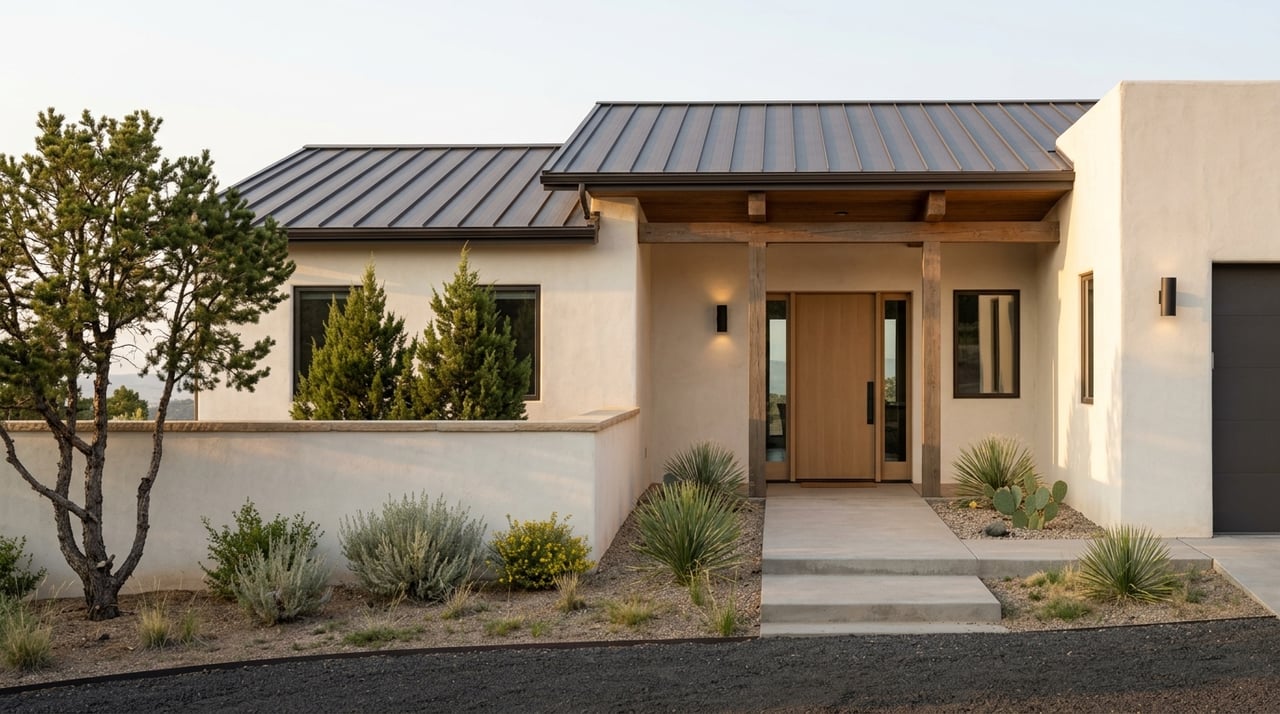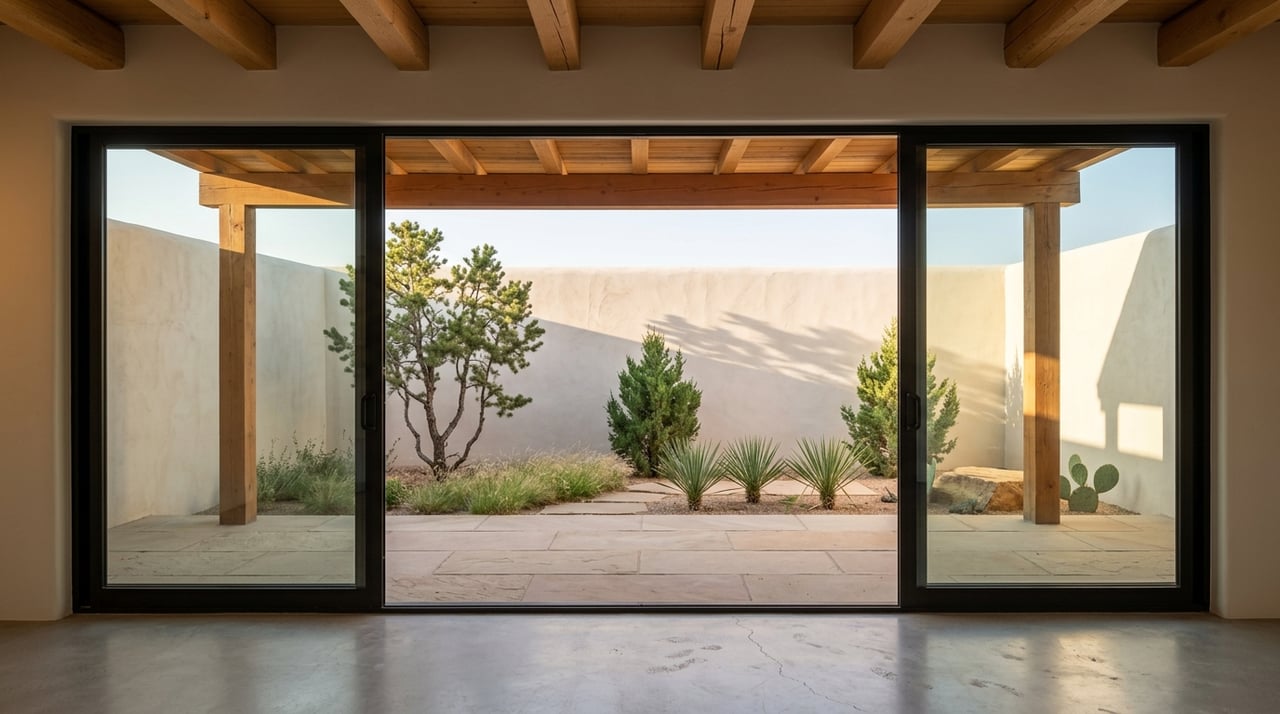
If you are thinking about building or buying along Tano Road, you are not just choosing a home. You are choosing a site, a set of systems, and a level of day-to-day responsibility that can shape your experience for years. The good news is that with the right due diligence, Tano Road can offer the setting, flexibility, and long-term value many Santa Fe buyers want. Let’s dive in.
Why Tano Road Feels Different
Tano Road is best understood as a semi-rural, parcel-by-parcel market, not a single neighborhood with one set of rules. The Tano Road Association is a voluntary neighborhood organization, not an HOA, and it does not require monetary assessments. That creates a different buying experience than you might find in more structured communities.
At the same time, that flexibility does not mean every property is simple. Some lots may still be governed by subdivision covenants, shared-well agreements, easements, or other recorded restrictions. If you are considering a property here, it is important to review the specific parcel rather than assume the entire area works the same way.
Start With the Site, Not Just the House
Along Tano Road, the land often matters just as much as the structure on it. Even if you are buying an existing home, the site conditions can affect comfort, operating costs, future improvements, and resale value. That is why a beautiful setting should always be matched with practical review.
A strong homesite often balances views, daylight, and solar orientation. The U.S. Department of Energy says south-facing windows capture the most winter sunlight, and passive-solar collectors generally work best when they face within 30 degrees of true south and avoid shade during the heating season between 9 a.m. and 3 p.m. Good orientation can also improve daylight inside the home.
What to look for on a lot
- Building area that supports the home placement you want
- Orientation that helps with sunlight and seasonal comfort
- Topography that works for access and construction
- Road access that appears usable year-round
- Space for well, septic, driveway, and any future improvements
- Recorded documents that do not conflict with your plans
Access and Topography Deserve Early Attention
In the Tano Road area, topography is not just about views. Santa Fe County notes that steep slopes can influence wildfire behavior, and it also points to narrow roads, limited access, inadequate water supplies, and poorly planned subdivisions as factors that can increase risk. Those issues can affect both safety and development feasibility.
Access should be reviewed early, especially if you plan to build. Santa Fe County fire guidance says roads should have a 20-foot all-weather driving surface, driveways should have a 14-foot all-weather driving surface, and both should maintain 13 feet 6 inches of vertical clearance. The county also says addresses must be visible from the road, and some properties may need a turnaround for fire apparatus.
Why access matters beyond convenience
Access can affect more than your daily drive. It may influence emergency response, construction logistics, delivery access, and how easily a future buyer feels confident about the property. On semi-rural land, this is one of those details that can become a major factor later if it is not checked up front.
Utilities Are a Core Part of the Decision
Many Tano Road properties rely on individual or shared wells, septic systems, and propane. The Tano Road Association also notes that well water in the area tends to be hard. That means utility due diligence is not optional. It is central to understanding how a property functions.
If you are buying land, you will want to understand how water, wastewater, and energy will actually work on the parcel. If you are buying an existing home, you still need to know the condition, capacity, and operating setup of these systems, especially if you hope to expand later.
Key utility questions to ask
- Is the property on an individual well or shared well?
- Are there recorded well agreements or water covenants?
- Does the property have septic capacity that fits current and future needs?
- Is propane the primary fuel source?
- Are there utility-related restrictions in the plat or title documents?
Permitting Is Part of the Planning Process
Santa Fe County says all building and development outside incorporated cities must comply with the Sustainable Land Development Code and require a development permit. That includes residential construction, additions, grading, subdividing lots, fences or walls over 6 feet, and solar installations. In other words, many improvements that buyers might think of as straightforward still require review.
The county also notes that its code addresses topics such as lots, setbacks, access and easements, water supply and conservation, energy efficiency, open space, rainwater catchment, terrain management, and archeological protection. For a Tano Road buyer, this means the question is not simply whether a project sounds reasonable. The question is whether the site and the code support it.
Site work can trigger approvals
Santa Fe County states that grading, clearing, and grubbing require a development permit, and that the work is limited to approved areas. That matters if you are planning a new build, a driveway change, or any site preparation tied to future construction.
Water Rules Can Be Lot-Specific
Water is one of the most important due-diligence topics along Tano Road. Santa Fe County says its Domestic Well Use Metering Program is being revised and meter readings are not currently being collected, but it also states that developments using a well shall participate under the county code. The county further notes that some properties are required to meter and report domestic well use based on plats, water covenants, and code requirements.
The Tano Road Association reinforces that well metering and reporting requirements may come from both Santa Fe County and the Office of the State Engineer. It also notes that subdivision covenants and shared-well agreements may impose additional restrictions. For you as a buyer, that means one parcel may be relatively simple while another may carry several layers of water-related review.
Documents worth reviewing before you commit
- Recorded plat
- Title documents
- Water covenants or declarations
- Shared-well agreements, if any
- Any parcel-specific restrictions tied to development
Buying an Existing Home With Expansion in Mind
An existing home on Tano Road can be appealing because many of the hardest development questions may already be answered. Access may be established, systems may be in place, and the building site may already be proven. Still, future expansion needs careful review.
Santa Fe County says accessory dwelling units must be incidental and subordinate to the main residence, generally no more than 50 percent of the principal residence and under 1,400 square feet. The county also says they must share the same architectural style and share a driveway and utilities. Accessory structures cannot be designed for dwelling use or contain a full bathroom.
For additions, the practical limit is often not just square footage. Septic approval, setbacks, and the amount of site disturbance can all shape what is possible. Santa Fe County also states that a bedroom addition requires septic approval from the New Mexico Environment Department, and some larger expansions may trigger rainwater catchment requirements.
Wildfire Resilience Should Be Part of the Conversation
In a semi-rural setting, wildfire resilience is not a side issue. Santa Fe County recommends fire-resistant materials such as stucco, masonry, and Class A roofing. It also emphasizes that limited access, narrow roads, and inadequate water supply are part of the human-built risk environment.
If you are buying a home to remodel, or a lot where you plan to build, it helps to think about defensible space, roof condition, access, and exterior materials early. These factors can influence both your planning process and your long-term comfort with the property.
How Tano Road Compares to Other Santa Fe Areas
Tano Road often appeals to buyers who want setting and flexibility, but it is useful to understand how that compares with other semi-rural Santa Fe options. In nearby Tesuque, there is an adopted community plan and a community district overlay with its own standards that apply when they conflict with underlying zoning. That creates a more explicit community-level framework than you will usually find on a Tano Road parcel.
Las Campanas is more association-driven, with a formal design review process and master association governance. Eldorado is also more rule-based, with common-interest association governance and review expectations for certain exterior changes and structures. Compared with those areas, Tano Road generally offers fewer community-wide controls, but it asks more of you during due diligence.
The tradeoff to understand
Tano Road can offer privacy, character, and flexibility that many buyers value. The tradeoff is that you need to verify the details of the specific parcel, including access, water, septic, easements, and recorded restrictions. In this market, site selection is a checklist exercise, not just a lifestyle decision.
A Smart Tano Road Buying Checklist
Before you move forward on a lot or home along Tano Road, make sure you have clear answers to the basics.
- Confirm whether the property is governed by any covenants or agreements
- Review access, road width, driveway conditions, and turnaround needs
- Understand the well setup, water restrictions, and any reporting requirements
- Verify septic status and whether it supports your intended use
- Check whether your future plans would require county development permits
- Review setbacks, easements, terrain limits, and other parcel constraints
- Consider solar orientation, light, and long-term site performance
- Evaluate wildfire-related factors such as slope, materials, and defensible space
For many buyers, this is where local guidance adds real value. A property can look ideal at first glance, but the best decisions come from matching design goals with practical feasibility.
If you are weighing a homesite, evaluating an existing property, or trying to understand the real tradeoffs between flexibility and complexity along Tano Road, working with a broker who understands land, design, and development can make the process much clearer. To start that conversation, reach out to Leslie Gallatin Giorgetti.
FAQs
What makes Tano Road different from an HOA neighborhood in Santa Fe?
- Tano Road is generally a parcel-by-parcel market. The Tano Road Association is a voluntary neighborhood organization, not an HOA, but some properties may still have subdivision covenants, shared-well agreements, or other recorded restrictions.
What utilities should buyers expect along Tano Road in Santa Fe?
- Many properties in the Tano Road area rely on individual or shared wells, septic systems, and propane, so buyers should review water setup, septic capacity, and utility-related documents early.
What should you check before building on a Tano Road lot?
- You should review access, topography, solar orientation, well and septic feasibility, easements, setbacks, recorded restrictions, and Santa Fe County development permit requirements.
Can you expand an existing home along Tano Road in Santa Fe County?
- Often yes, but expansion may depend on septic approval, setbacks, site disturbance limits, and county rules for additions or accessory dwelling units.
Why is access such an important issue on Tano Road properties?
- Access affects everyday usability, construction planning, and emergency response. Santa Fe County also has standards for road width, driveway width, vertical clearance, visible addressing, and possible turnaround requirements.
Is Tano Road a good fit if you want flexibility in Santa Fe real estate?
- It can be, especially if you value privacy and a less centralized rule structure. The tradeoff is that you need to do more parcel-specific due diligence before you buy.